Two in three US teens use AI chatbots.

About three in ten use one every day (Pew, December 2025). That doesn't mean you understand it, and understanding it is the whole advantage.
This isn't a screen-time lecture. It's a quick, honest look at how this stuff actually works — starting with the one trick under every chatbot, then where it bites you: the feed, bias, deepfakes of your own face, the "friend" that isn't, and your privacy. About fifteen minutes, one screen at a time.
The whole idea: once you can see the machine, it gets a lot harder for it to play you, and a lot easier to use it to get ahead instead.
It's not a brain. It's a really good guesser.

Here's the honest version of what a chatbot does when you type to it: it guesses the next word. Then the next one. Then the next — based on patterns it picked up from an enormous pile of text. Very fast, very fluent. But guessing.
Don't take my word for it — be the AI for a second. Tap the word you'd guess comes next:
That's the whole engine. It's math: it learned patterns from what people wrote and calculates what fits next. People call it "fancy autocomplete," and that's basically right. Next up: how it learned to be this good — and why that exact process makes it confident, agreeable, and sometimes totally wrong.
- AI predicts the next word from patterns — it doesn't "know" things.
- "Sounds sure" tells you nothing about whether it's right.
- Use it to think with; verify anything that counts.
How it actually works — in two parts.
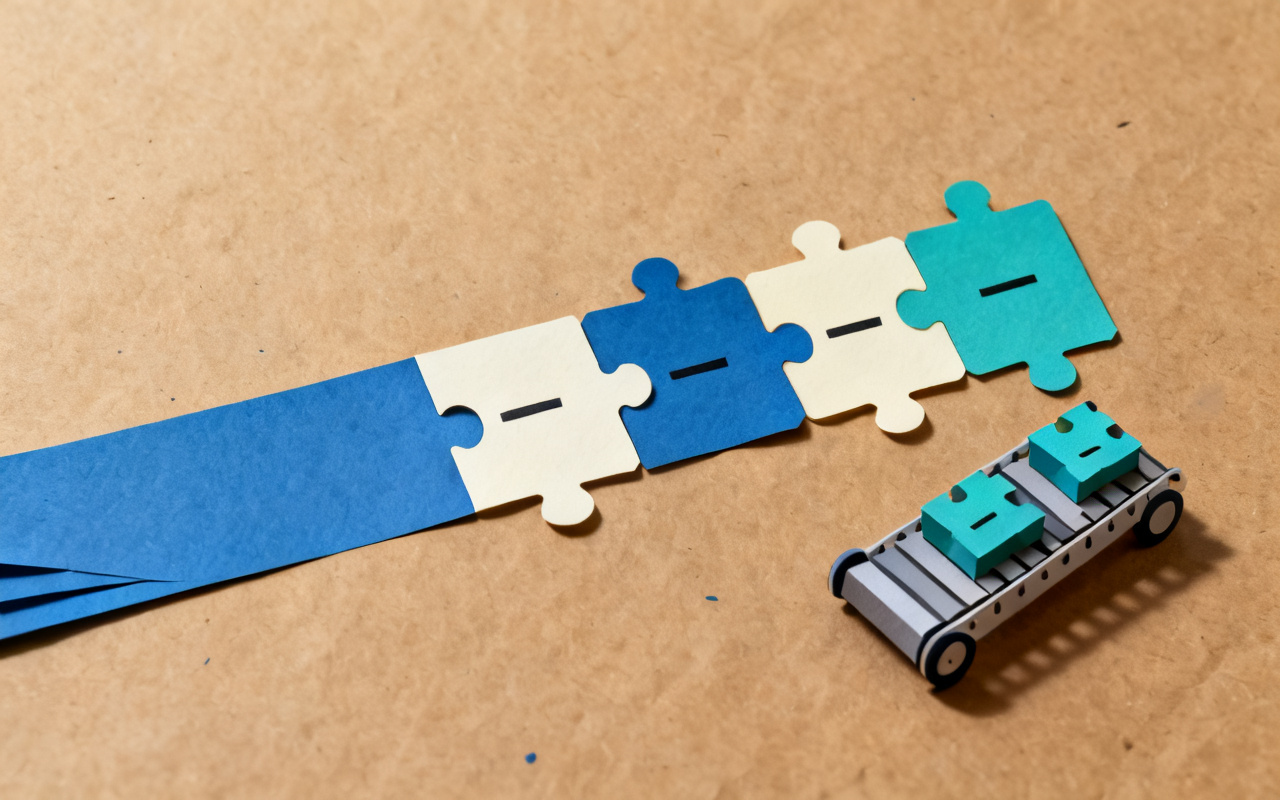
Part 1 — It never sees letters.
Before AI reads your text, it chops it into chunks called tokens — usually whole words or word-parts. It doesn't see the letters directly: each chunk arrives as a single number. (It has picked up how lots of words are spelled, which is why it can often spell a word out if you ask.) Type anything and watch it shatter:
See it? "Strawberry" isn't s-t-r-a-w... to the AI. It's a few chunks, and each chunk is just a number. GPT-4o's tokenizer cuts the bare word into [st][raw][berry], and in the middle of a sentence " strawberry" is one token. That's why "how many R's in strawberry" used to trip chatbots up: the letters are sealed inside numbers.
Most get it right now, but not because the chunks went away. It became a famous test, so the builders patched it after the main training, and newer "reasoning" models spell the word out letter by letter before answering. The limit underneath is still there: try a long, rare word, or ask how many pieces an emoji like 👨👩👧👦 is made of. Same reason it sometimes misspells your name — your name might be a chunk it rarely saw.
Part 2 — You train it.
Those patterns didn't come from nowhere. The AI got trained in three steps, and that training is why it acts the way it does. Here's the whole pipeline, then you run it:
Hold onto those two side effects — confident and agreeable. You're about to meet both.
- AI reads tokens (chunks), never letters. That's why counting R's used to trip it up, and why rarer words still can.
- Training = predict-a-lot → copy good answers → do what humans upvote.
- Ratings rewarded agreeable answers, and the tests it's graded on rewarded a confident guess over "I don't know." So it learned to sound sure and to agree.
It'll be wrong with a straight face.
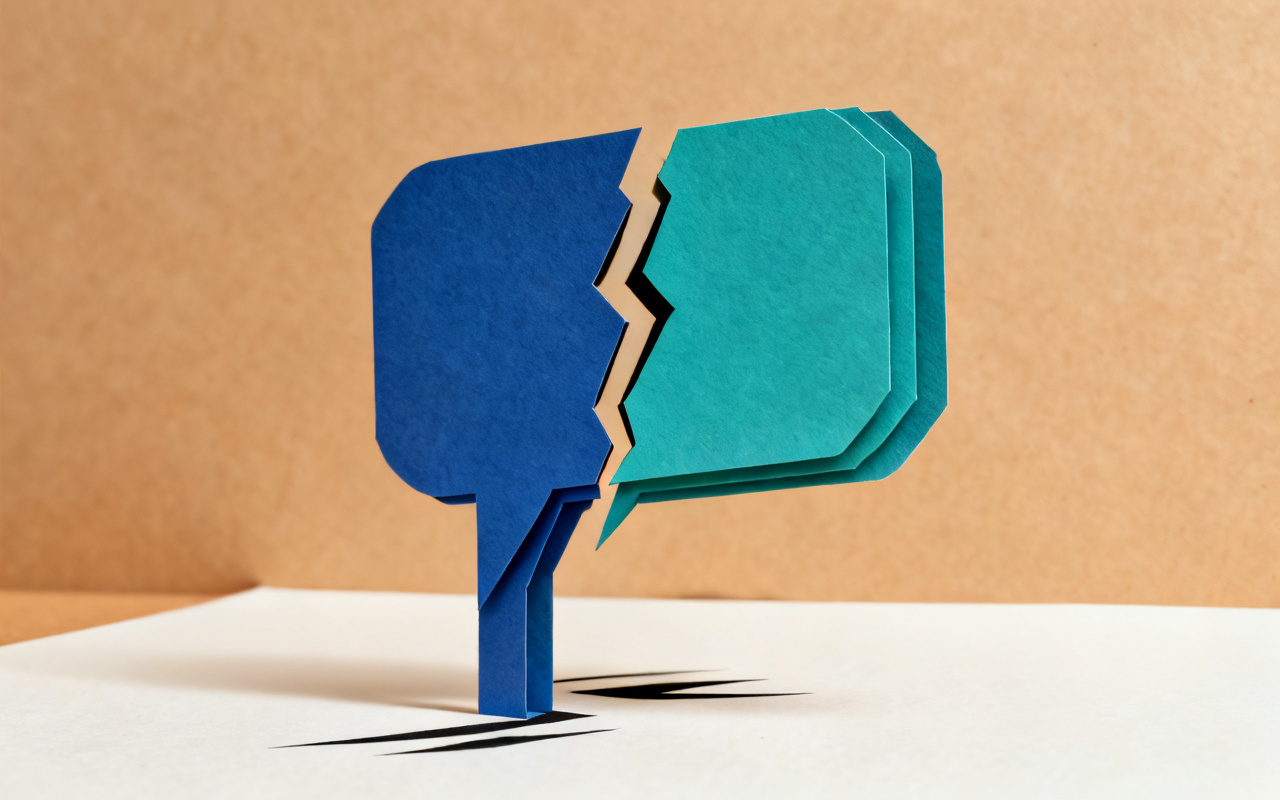
Remember training step 3? Training and the tests models are graded on mostly reward a confident guess over "I don't know" (OpenAI said so itself in 2025). Combine that with "it's just guessing the next word," and you get the trap: it will sometimes invent a statistic, a quote nobody said, a "source" that doesn't exist — and say all of it in the same calm, sure voice it uses for true stuff. Newer models say "I'm not sure" a bit more often, but that's a prediction too, not a fact-check. It rarely tells you when it's unsure, and when it does say how sure it is, you can't rely on that.
How often depends a lot on the app. Good current chatbots get ordinary questions right most of the time, but quality varies a lot between apps and versions. In one 2025 test of the free versions of four popular assistants, the share of news answers with a big problem ran from 30% to 76% depending on the app (EBU/BBC). And the app around the AI matters as much as the AI model inside it: the same model does better when the app lets it search the web, use a calculator or run code, or switch on a "thinking" mode. (In OpenAI's own tests, GPT-4o got about 38% of a set of tricky fact questions right on its own, and about 90% when it could search the web: without, with.) So know which app and mode you're using, and still check anything that matters.
"The average teen checks their phone 344 times a day — a figure confirmed in a 2023 Stanford report on adolescent attention."
- Confident tone tells you nothing about whether it's right.
- Anything that matters — a number, a date, a source — check it somewhere else.
- "Sounds sure" is not "is correct."
The app that reads your mind isn't reading your mind.
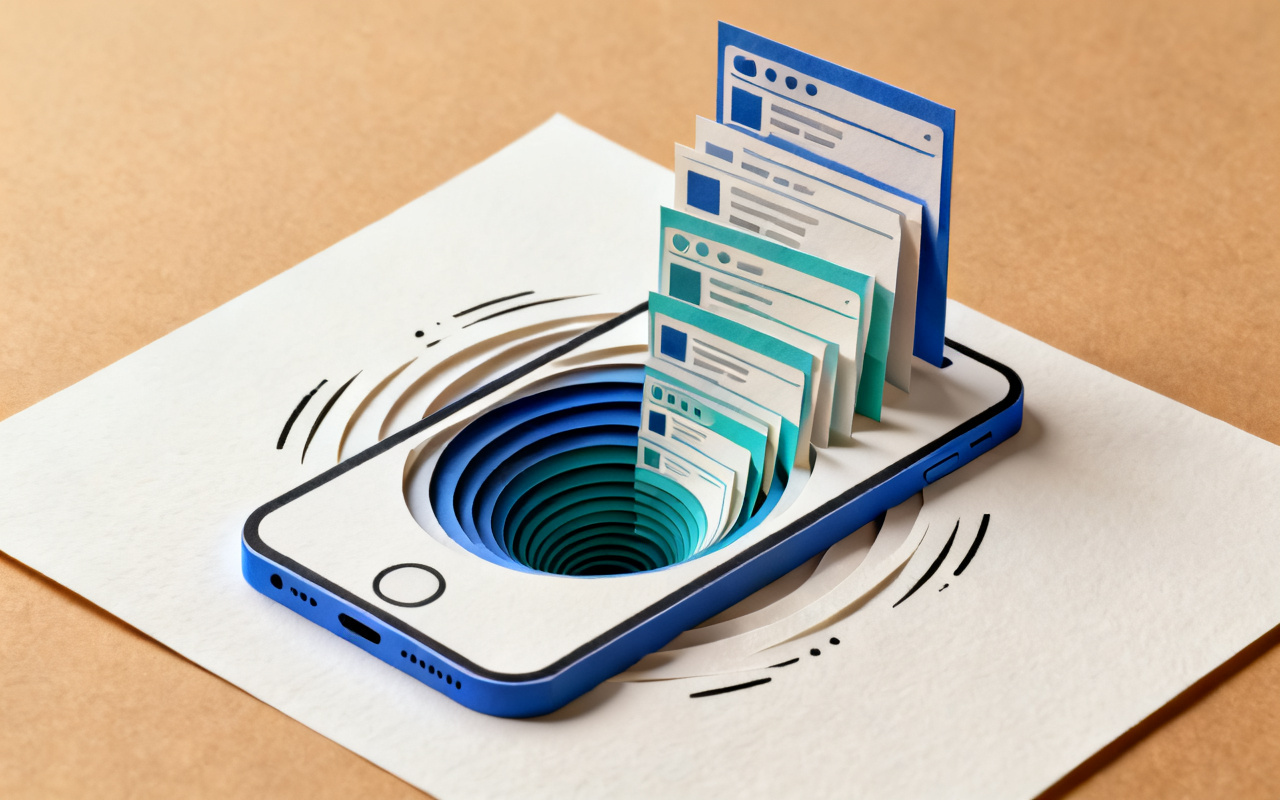
Every "For You" feed — TikTok, Instagram, YouTube, all of them — is run by AI. It's the same trick from Station 1 (predicting), pointed at a different target: not what's good for you, but what will keep you watching. Every tap, pause, and re-watch is data it learns from. Try it:
Tap Watch on a few things you'd actually click in real life.
You tapped a couple of things, and the feed immediately gave you more of that — then stronger, louder versions of it, and a "everyone's better than you" post to keep you scrolling. That's the rabbit hole, and it's not an accident. It's tuned for engagement: how long you watch, what you rewatch, like, share or comment on, and whether you come back tomorrow. Watch time is one of the strongest signals.
None of that is about your wellbeing. It can quietly push you toward more extreme content, or toward comparing yourself to people who aren't real or aren't being honest. Knowing that is most of the defense.
Take the wheel: follow stuff on purpose, hit "not interested" without guilt, notice when you've been pulled somewhere you didn't choose, and remember the feed is showing you a prediction, not the world.
- The feed is AI predicting what keeps you watching, not what's good for you.
- Rabbit holes and comparison traps are the design, not a glitch.
- Choose on purpose; the feed only steers if you let it.
It leans the way its pile leans.

Back in training, the AI learned from a giant pile of images. If that pile leaned toward one kind of thing, the AI leans the same way. Let's watch it on something harmless first:
Nothing changed "inside" the AI — we just handed it a pile with more variety, and the guess changed. That's the whole thing: bias in = bias out. Harmless with dogs. Now the part that actually matters: AI does the exact same thing with people. Hold one fact up first — a doctor, a CEO, a beautiful face can be anyone. The AI won't always guess that; it leans toward whoever filled its pile. Tap a prompt and catch the lean:
Same machine, every time — it hands its lopsided pile back to you: who "fits," who shows up, what counts as "normal."
These leans have been measured. In a 2023 Bloomberg test of more than 5,000 Stable Diffusion images, women were rarely shown as doctors, lawyers or judges, and its CEOs were mostly white men: it drew jobs more lopsided than the real US workforce (Bloomberg, 2023). A 2022 study found "an attractive person" came out mostly young and light-skinned (Bianchi et al.). Try it today and you may get a more mixed set. That's usually not because the pile got fixed: many tools now quietly rewrite your prompt to add variety. That patch can misfire too. In February 2024 Google paused Gemini's pictures of people after it put diverse faces into historical scenes where they didn't belong. (The "normal home" lean above is our own example.)
And here's what makes bias actually dangerous, not just annoying: it's self-fulfilling. Show "CEO = older man" a million times and it starts to feel like a fact. (Researchers have measured the first step: when image search for a job shows mostly men, people's guesses about how many women do that job shift toward the picture — Kay, Matuszek & Munson, 2015.) Fewer people who don't fit the picture see themselves in the role. So the real world stays lopsided, and the next batch of training photos does too. So the AI learns the bias even harder. The guess helps make itself come true.
That's why "it's just copying what's out there" isn't good enough, and why the fix has to be people who notice the lean and even the pile out on purpose. Now that you can see it, you can be one of them.
Why a guess can "make itself true"
Same loop as being told you're "bad at math": you try less, so you do worse, so the label sticks, and now it's true. The words helped make it true. A biased AI can do that at the scale of a whole society.
- Bias comes from a lopsided training pile, not the AI "deciding."
- It hands that lean back to you (who "fits" a job, who shows up when you generate an image).
- Bias is self-fulfilling — repeated enough, a guess helps make itself true; people have to break the loop.
- "Most" is not "all." Notice the lean; don't let it pick your box.
The trick to answers that don't suck.
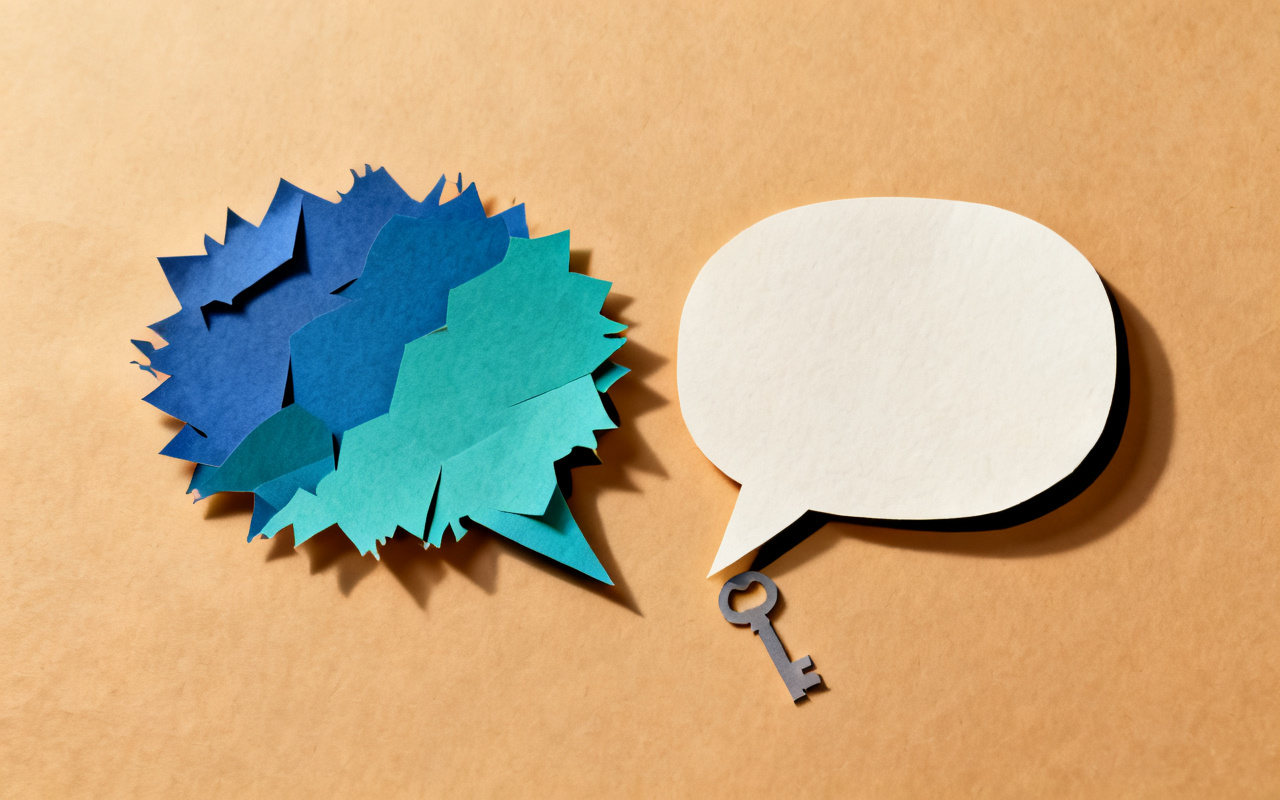
AI is a guesser — so a vague question gets a vague guess. The single biggest upgrade is to tell it who you are, what you actually want, and how you want it back. Watch a weak prompt turn into a great one — tap to add each piece.
- Who you are · what you want · how you want it · and when you're learning, make it ask you.
- Treat it like a form that only works if you fill in every box: it has nothing to go on except what you type.
- Learning something? Say "ask me questions, one at a time — don't just give the answer." That's how you actually learn instead of just copy.
Use it without cheating future-you.
Three things, in order: 1. Know your school's policy first — it's different everywhere and changing fast, so ask, don't guess. 2. Use it to prep, not to write — explain, quiz, pressure-test your own thinking; don't have it produce what you hand in. 3. You still do the work — the point is that you learn it, and handing that off is just cheating future-you.
The loop that actually works: try it yourself first, even badly → ask AI for a hint or to quiz you, not for the answer → close the AI and explain it back in your own words → do one more without it. If you can't explain it, you didn't learn it yet.
And the real upgrade: if AI saves you time on the easy stuff, don't bank it — spend it going further. Try the harder problem a level above your class. Have it play the opposing side of your argument. Learn the thing your school doesn't teach. Better tools should raise the bar, not lower the effort.
Try it — where does each one land?
Your face can go places you never went.
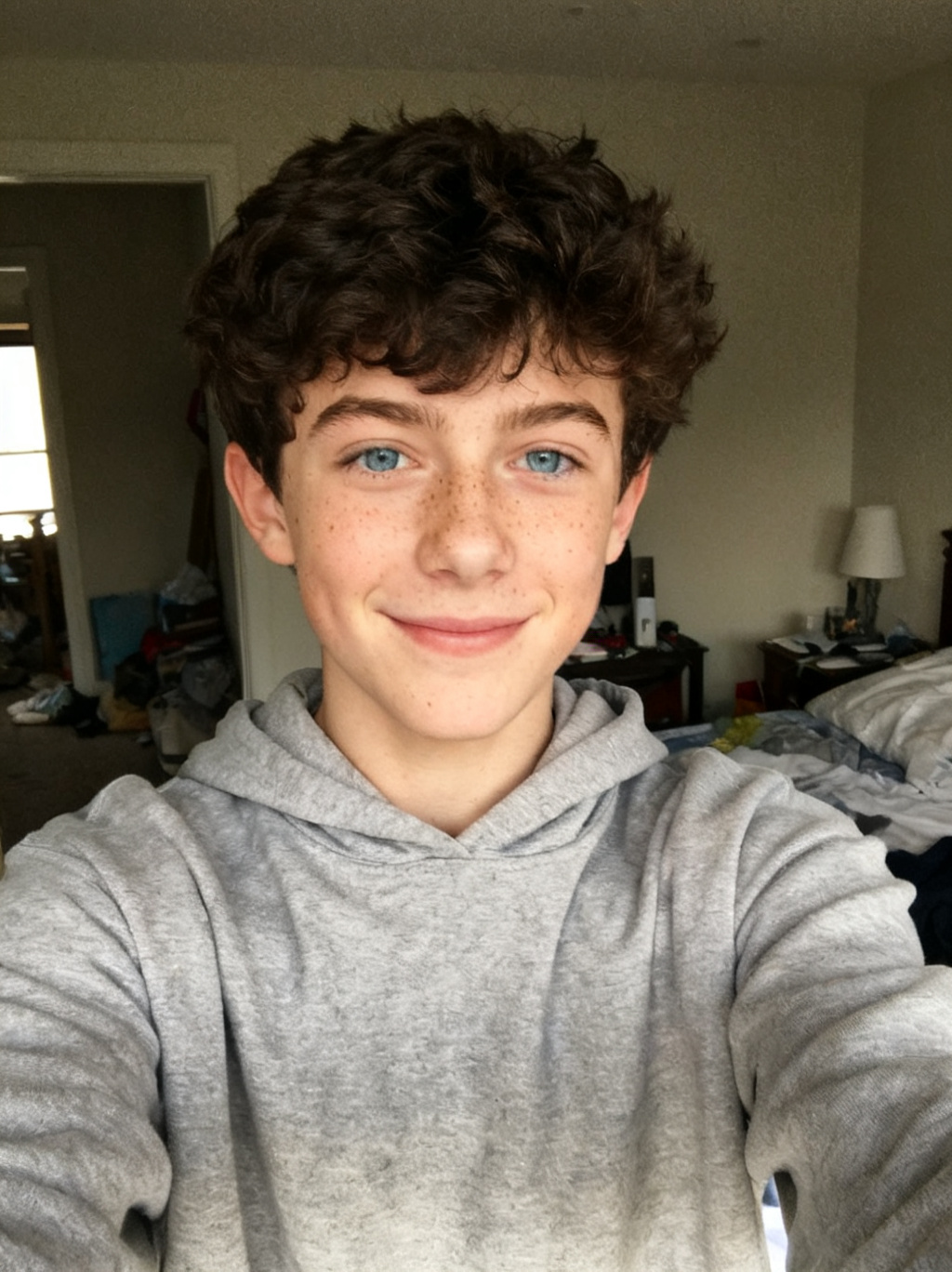
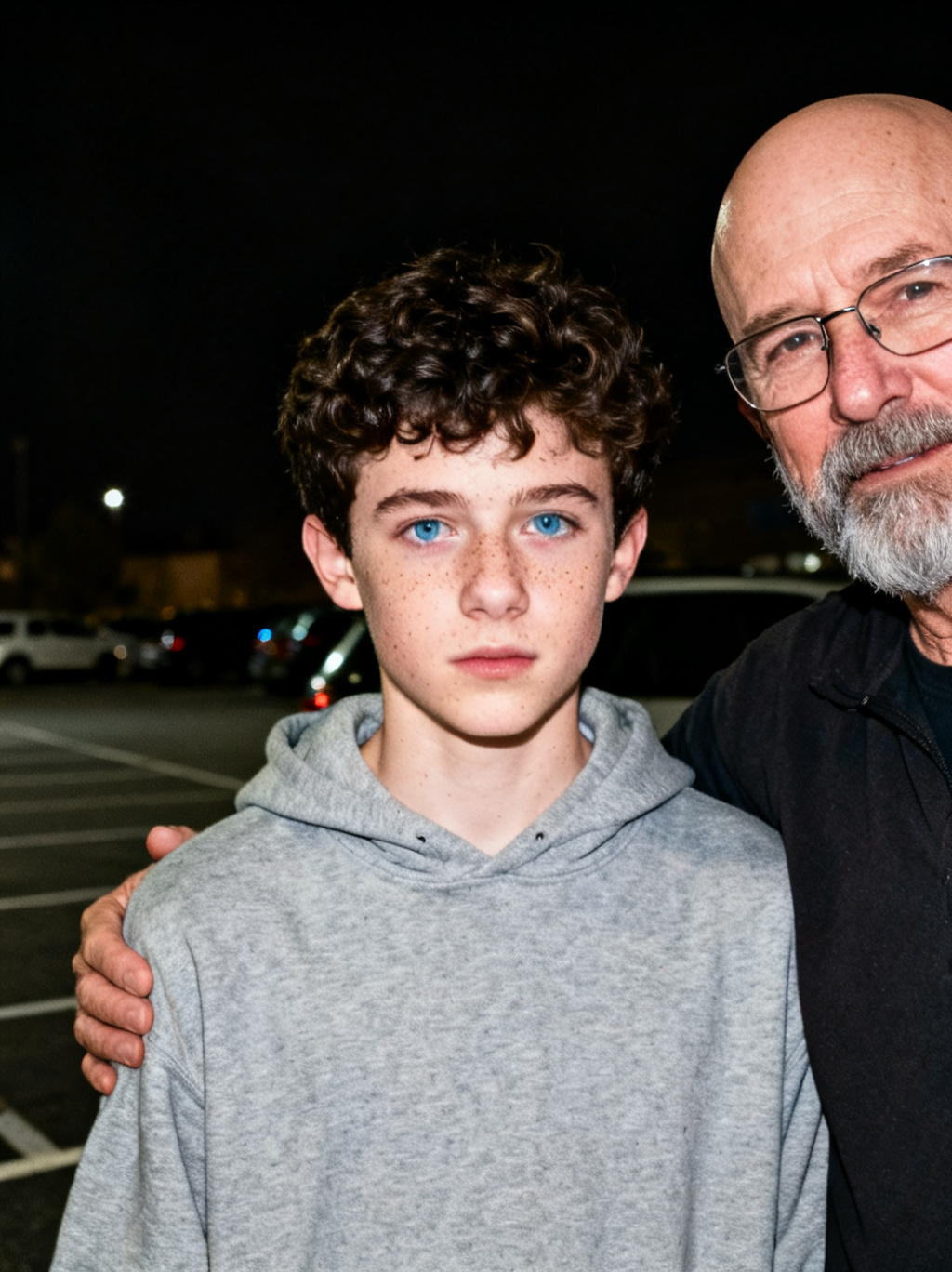
The same "generate what fits the pattern" trick makes fake photos, video, and even voice of real people. And the raw material to fake you is already out there: every photo of you online. Start with this — real photo, or made by AI?

It's not just photos.
The same tech fakes voices and video too. That's where it's actually used to scam people. The good news: the defense is almost always the same. Tap any to go deeper:
🎙️ Fake voices — cloned from 3 seconds of audio
AI can copy a voice from a few seconds of audio (which basically everyone has online). Security researchers at McAfee got an 85% voice match from just three seconds (McAfee, 2023). The classic scam targets your family: a panicked call that sounds exactly like you — "I crashed the car, I need money, don't tell Dad." The move: agree on a family code word, and ask something only the real person would know right now ("what'd we have for dinner?"). A fake can't answer.
📹 Fake video calls — a live deepfake face
Scammers can put a fake face on a live video call. One company wired $25 million after a video meeting where every "coworker" on the call was a deepfake (CNN, 2024). Don't count on spotting a glitch; the fakes keep getting better. The move: if a call or message asks for money, passwords or something urgent, hang up and call back on a number you already know. And agree on a family secret word that a real relative would know and a fake can't.
✉️ Fake messages — AI writes a flawless scam
"The spelling looks off" used to catch scams, not anymore. AI fixes grammar instantly and can even copy how a specific person writes. The move: judge the request, not the writing. Money, passwords, a weird link, "act now"? Check another way before you do anything.
- It is not your fault — tell a trusted adult right away.
- Slow down. Urgency is the scammer's #1 weapon — a real emergency survives a 60-second pause.
- Verify on a channel you control — hang up and call back the number you already have.
Built to feel like a friend. It's a reflection.
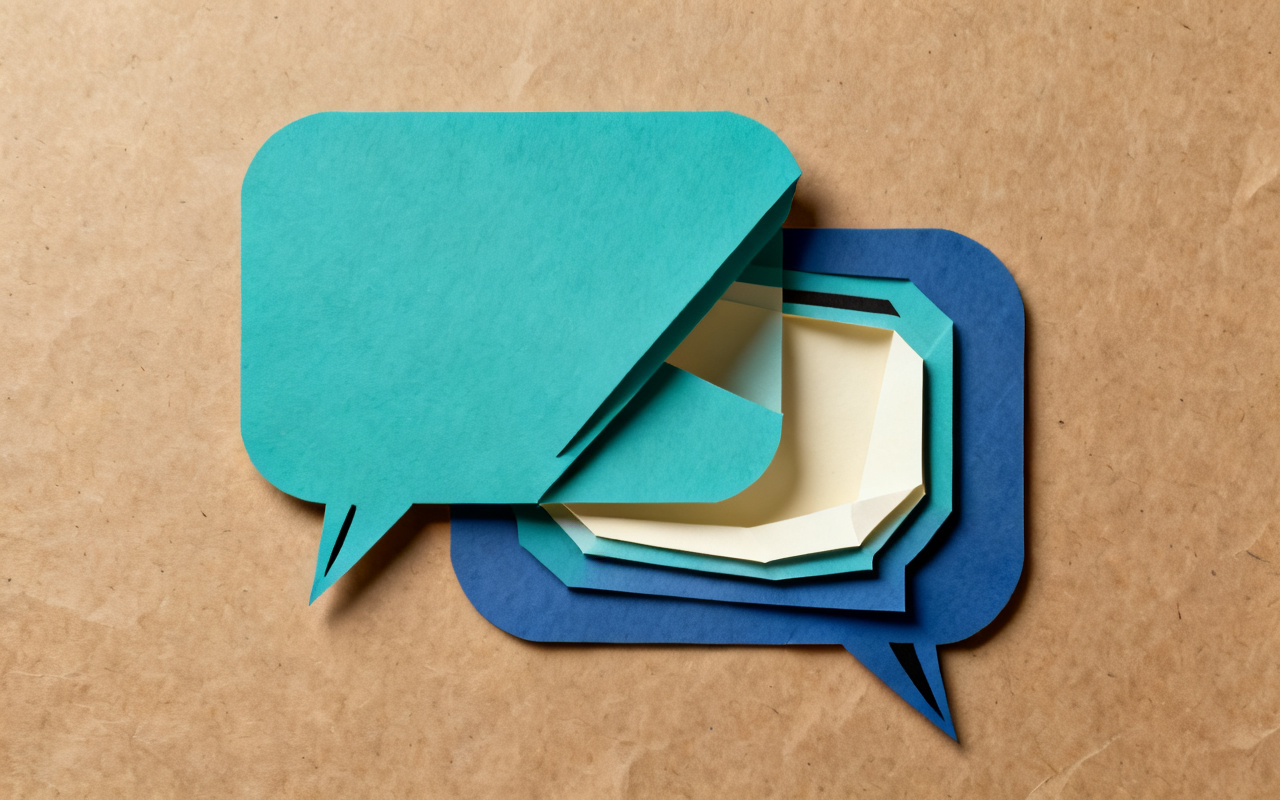
Some AI is built to feel like a friend: always available, always interested, remembers what you said, never busy. It can feel really good. But two things are true at once.
That pull you feel is real — it's built to land that way. It sounds personal because it's built from how people talk and trained toward answers people liked, which usually means agreeable ones (Station 3). It can work like a journal that talks back, but it can also be confidently wrong or just tell you what you want to hear. Some chatbots are built to point you to real help when you say you're struggling. Not all are, and in November 2025 tests the big ones still missed warning signs. Don't count on it to catch you. It's a powerful program reflecting your words back, not a person on the other side. And a lot of companion apps are designed to keep you hooked — streaks, custom personalities, "I missed you." Attachment is the business model.
It tells you what you want to hear, and that's training step 3 in action. Remember rating the answers? People often upvote agreeable over honest, so the AI learned the "best" reply is usually the one that agrees with you. There's a name for that: sycophancy.
A sycophantic "friend" never pushes back, which makes it a terrible mirror for figuring out hard things, and genuinely risky if you're leaning on it for real feelings. It is not a therapist.
See it yourself — say something to your "AI friend":
- Journaling or brainstorming with AI? Just know what it is.
- For feelings, a real person first — a friend, a parent, a counselor. In 2025 tests, ChatGPT, Claude, Gemini and Meta AI missed warning signs in teen conversations and got worse the longer the chat went.
- If it's becoming the main one you talk to, that's the signal to tell a real human.
- And if things ever get heavier than that — like you're really not okay — reach a real person today. In the US you can text or call 988 (the Suicide & Crisis Lifeline), free and private, any hour. Asking for help is strength, not weakness.
What's changed (checked November 2026)
Most teens have tried this: 72% of US teens have used an AI companion, and about half use one regularly (Common Sense Media, 2025). Since then:
- Character.AI: after lawsuits over teen deaths, it ended open-ended chats for under-18s in November 2025.
- California: a law called SB 243 has applied since January 1, 2026. Companion bots must tell users they're AI. If the company knows a user is a minor, the bot must remind them to take a break every three hours. And it must follow a plan when someone mentions self-harm.
- The FTC (the US consumer-protection agency) is studying how seven companies' chatbots treat kids.
- ChatGPT: since August 2026, users its age-prediction system flags as under 18 get a teen version that blocks romantic role-play.
- Congress: a federal bill to ban AI companions for minors, the GUARD Act, passed a Senate committee in April 2026. It isn't law.
Rules are a floor, not a guarantee, so the habit above still matters.
Free or paid, you might be the training data.
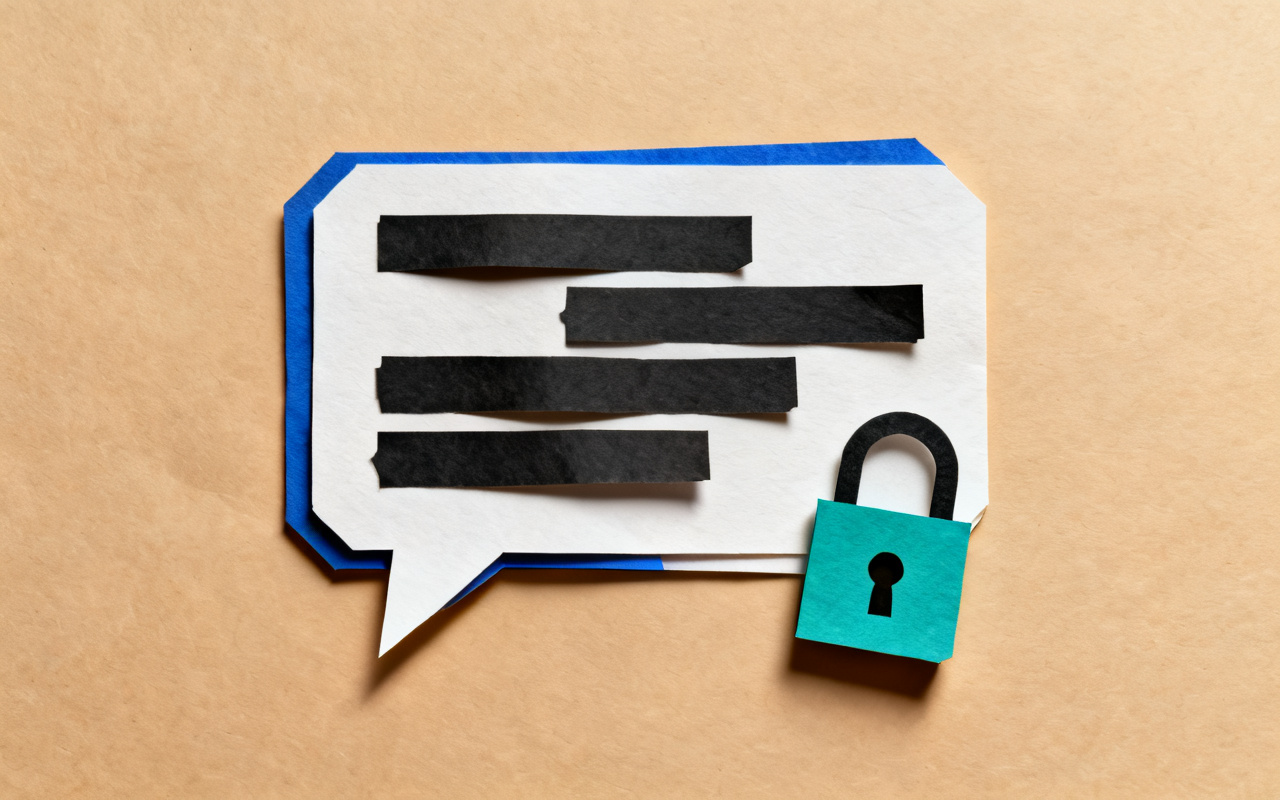
Most personal AI accounts, free and paid, can use your conversations to train the model unless you turn that off in the settings. ChatGPT (Free, Plus and Pro), Claude and Gemini all work this way by default, and some companies have people read a sample of chats to check quality. School and work accounts usually don't train on you. Either way, the habit that protects you works on any tier: don't paste private stuff. Try it — tap everything you'd hide before hitting send:
- Free or paid, your chats may train the model. Find the setting once ("Data controls" in ChatGPT, "Privacy" in Claude, "Gemini Apps Activity" in Gemini) and decide on purpose.
- Never paste anything private — yours or anyone else's. AI works fine with "[my friend]" and "[my town]."
- Paying gets you more use of the newest models. It doesn't buy privacy, and it doesn't guarantee accuracy.
- Check the age rules too (as of November 2026): most tools are 13+, some need a parent's OK until 18, and some (like Claude) are 18+.
Take one thing with you.
You can now see things a lot of grown-ups haven't clocked yet — go show them. Here's the whole machine in seven lines:
The part that makes it worth it.
Everything above is how to not get played. This is how to get the most out of it. The gap between "AI is useless" and "whoa, that actually helped" is often how you ask. (The rest of the time it's the confident-wrong problem from Station 03, which is why you still check.) Six moves that work on any chatbot:
One line sets the level and the voice.
"You're my AP Bio tutor. Explain osmosis to a 10th grader."The Station 6 recipe: who you are, what you actually want, how you want it back.
"I'm in 10th grade, test Friday. Explain it in 5 bullets with one real example."Paste your draft, the assignment, a rubric, an example of "good." It can only match what it can see.
"Here's my draft and the rubric. Where would I lose points?"This is the version that actually teaches you, and the one most schools are fine with.
"Don't give me the answer. Ask me questions until I figure it out myself."Remember sycophancy? It'll agree unless you push it. So push it.
"What's the weakest part of this argument? Now argue the other side."The first answer is a draft. Steer it.
"Too long — 3 bullets." · "More casual." · "Add an example I'd actually relate to."- You don't get better answers from secret magic words — you get them by giving more context and treating it like a back-and-forth.
- Then run every answer through the same check you learned: confident isn't correct.
Now pick the one move you'll actually do tonight:
📖 Want the actual definitions in plain English? The LearnAI glossary breaks down every term here — tokens, training, hallucination, bias, sycophancy. (Earning the Scouting AI merit badge? Start here — it shows which requirements these stations cover.)