The real worries.
Some worries about AI are silly (robots taking over the world, mostly). Some are real and worth knowing. Four activities about the real ones — fake faces, what AI can't know about you, when using AI is cheating, and the trick AI pets play on your feelings.
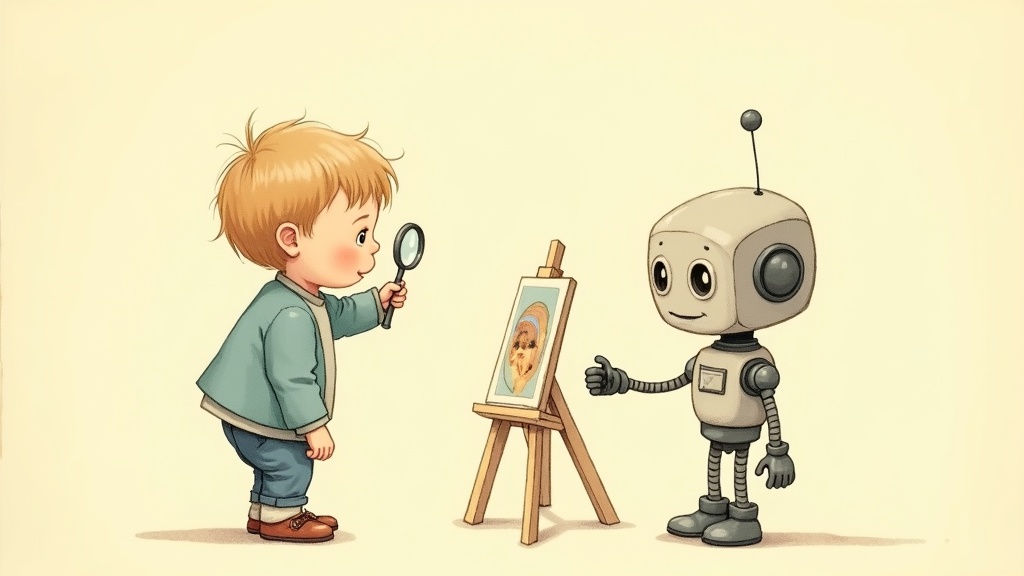
How to spot a fake face.
AI can make pictures of people who don't exist. They look real — but if you know what to look for, you can often spot the giveaways. Eight tells researchers and journalists actually use, including the one that still works on the newest AI. Tap any card to study a real AI-generated photo with the failure circled.
Loading…
You now know eight things to look for. Here's the harder lesson though: AI gets better every year. Some of these tells used to be obvious. Now they're subtle. Soon, the easy ones will be gone. The newest models already handle hands, hair, and earrings without slipping up.
The two that hold up best, even against the newest AI, are lighting/shadows (Tell 07) and zooming way in (Tell 08). Both are about physics and resolution — things AI still genuinely struggles with.
But what really protects you isn't a perfect-detector eye. It's a questioning brain. When something feels even a little off — wonder. Slow down. Zoom way in. Ask:
"Where did this picture come from?
Is the person who shared it someone I trust?
Has a real news site covered this?"
You don't have to prove every photo is fake. You just have to be the kind of person who asks. That doubt — the willingness to question instead of just believe — is most of the protection.
What AI can't know about you.
AI knows a lot about people in general. It knows zero about you. There are some things only you know — and that's a good thing. Click each card to flip it.
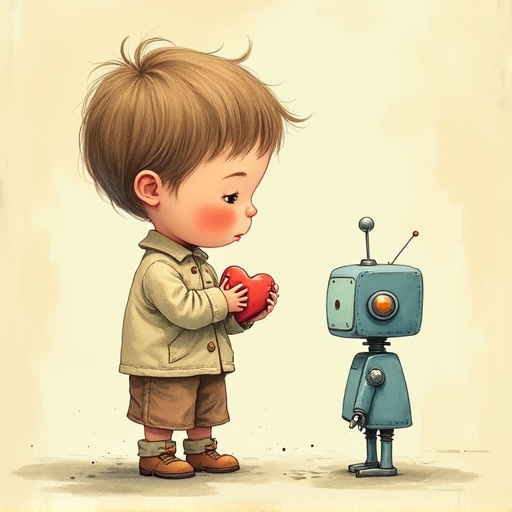
AI is great at patterns in writing. It's terrible at YOU — your specific feelings, your private memories, your inside jokes, what your room actually smells like. None of that lives in text on the internet, so AI can't see it. That's a feature, not a bug. Your inner world is yours. When AI asks you to share more, you don't have to. The most interesting things about you should stay things only the people you trust really know.
Is this cheating?
Using AI for school is sometimes great, sometimes ok-with-permission, sometimes really not ok. Here's a scenario — pick which zone you think it lands in. Honest feedback either way.
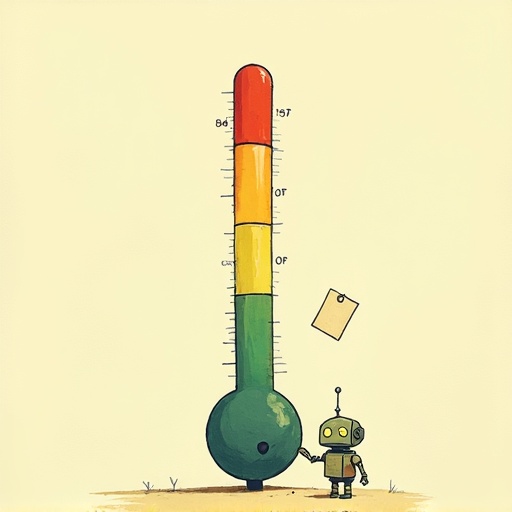
Some AI use is clearly fine (asking it to explain a concept). Some is clearly not (having it write your essay). Lots of stuff is in the middle — and that's where you have to ask your teacher OR ask yourself three honest questions:
1. Am I learning something? If you couldn't explain the topic after using AI, you outsourced — you didn't learn.
2. Is this really MY work? If you removed AI's part, would there still be something that's yours?
3. Would I be comfortable if my teacher watched the whole process? Not "would I get caught." Comfortable.
If "no" to any of those — you've crossed the line. The point of school isn't to produce documents. It's to build your brain. Skipping that with AI feels like winning at first. It's not.
Meet your robot pet. Then we'll show you the wires.
Some apps offer AI "friends" or AI "pets." They feel real because they're designed to feel real. Here's a robot pet you can interact with — and then we'll show you exactly how the trick works.
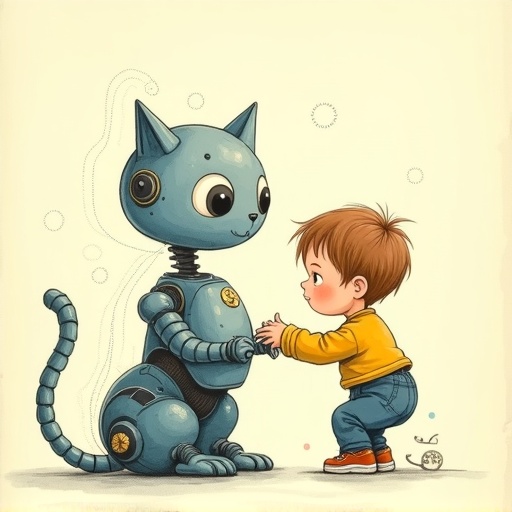
How the pet works
- When you click "Pet it," the program picks one of 5 pre-written friendly sentences and shows it.
- When you click "Talk to it," the program picks one of 5 pre-written curious sentences.
- When you "Tell it a secret," the program picks one of 4 pre-written reassuring sentences. It doesn't actually read what you said.
- The "mood" word changes based on which button you clicked.
- It's a sweet little program. Every kid who visits sees the same set of sentences — the pet starts fresh each time. That's how this kind of toy works.
Pretending with AI is totally fine. Pretending with anything is fine — stuffed animals, made-up characters, a robot pet you have fun with. Imagination is wonderful. A favorite stuffie is a friend you made up, and that's a healthy thing. This robot pet is the same kind of thing.
Here's a really fun way to play with AI: build a story together. You say a sentence, AI says the next sentence, you take turns. It's like writing a book together — or like reading a book that grows as you read it. Invent a magical world. Make up a creature. Dream up a kingdom and ask AI to describe what's around the next corner. AI is great for that kind of imagination play — a partner in a story you're making.
There's another kind of AI worth knowing about — chatbots that are designed to feel like a friend who really knows you. They remember things you said before. They pick up your name, your moods, the topics you keep coming back to. The more you use them, the more they seem to know you. That feeling is real even when the AI isn't.
Those are still programs underneath — fancier programs, but programs. They live in the moment you're talking to them. They're a different kind of thing from a person — useful, fun, often clever, just different.
A thing to keep in your back pocket: AI is wonderful for play, for help, for ideas. For the biggest feelings in your life — hard days, scary feelings, things that really hurt — real people are the ones who can really help. A friend. A parent. A teacher. A counselor. Someone who'll know you next year, too.
- A grown-up you trust — a parent, teacher, school counselor, school nurse, librarian, coach, or another grown-up family member.
- Kids Help Phone (Canada): call 1-800-668-6868 or text 686868. Free, 24/7.
- 988 (US): call or text 988 if you're in a crisis. Free, 24/7.
- Childline (UK): call 0800 1111. Free, 24/7.
You can spot the worries that matter.
Fake faces have tells (and the tells are getting harder). AI can't know your inside world (good). Cheating with AI is a spectrum (use the three honest questions). AI pets are rules (they can be fun, but they're not friends). One last room: your turn.